SHANGHAI, SHANGHAI, CHINA, October 25, 2026 /EINPresswire.com/ — Navigating the global sourcing landscape for industrial equipment can be challenging for procurement managers, plant engineers, and OEM buyers. Selecting the right air treatment equipment and finding a Professional Screw Air Compressor Factory from China requires evaluating manufacturing standards, compliance certifications, and long-term operating efficiency.
Below is an practical procurement FAQ guide addressing key evaluation criteria, technical considerations, compliance standards, and risk mitigation strategies for sourcing compressed air systems.
Q1: What CE compliance standards and certifications should European buyers look for when sourcing a screw air compressor from China?
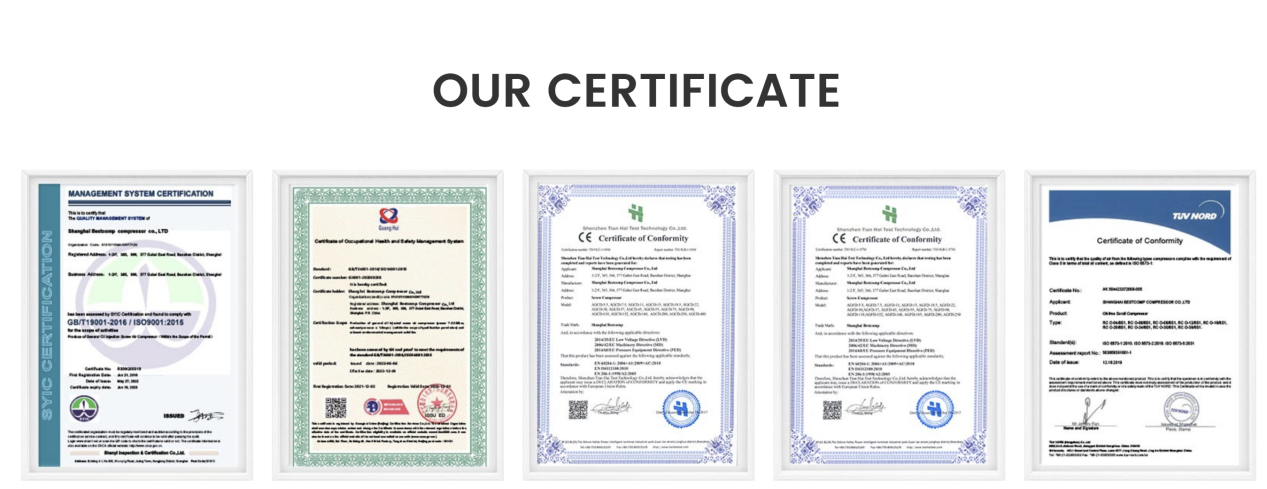
A1:When importing compressed air machinery into the European Single Market, compliance with European Union directives is mandatory. Buyers should verify that the factory holds valid CE certification issued by an accredited Notified Body. Key directives include:
Machinery Directive (2006/42/EC): Ensures structural integrity, operational safety, and hazard mitigation for rotating machinery.
Pressure Equipment Directive (PED 2014/68/EU): Governs pressure vessels, safety valves, and air receivers to withstand working pressure ranges (typically 6 to 10 bar or higher).
Low Voltage Directive (LVD 2014/35/EU) & Electromagnetic Compatibility (EMC 2014/30/EU): Applies to electrical enclosures, variable speed drives (VSD), and electronic controllers to prevent electrical interference and hazards.
Beyond mandatory CE markings, check for ISO 9001 (Quality Management Systems) and ISO 14001 (Environmental Management) certifications. Leading Chinese manufacturers frequently possess third-party validations (such as TUV audits) and hold extensive patent portfolios. For instance, established industry players like Shanghai Bestcomp Compressor Co., Ltd. operate dedicated overseas R&D facilities alongside domestic production bases across Shanghai, Hebei, and Henan. Backed by 106 R&D technicians and 12 third-generation patented production lines, top-tier factories maintain high precision control over air-end manufacturing and system assembly to ensure full compliance with international standards.
Q2: What critical parameters, materials, and manufacturing processes determine the long-term reliability of a screw air compressor system?
A2:To ensure high performance and low total cost of ownership (TCO), procurement teams should carefully evaluate the following structural and operational parameters:
Rotor Design and Air-End Craftsmanship: The air-end is the heart of any screw compressor. Look for high-precision, third-generation rotor profiles that maximize volumetric efficiency while minimizing internal air bypass. Robust housing materials, such as heavy-duty cast iron with precision CNC machining, reduce vibration and operational wear.
Drive System Efficiency: Evaluate whether the unit employs a direct-coupled connection or permanent magnet variable speed drive (PM-VSD). Direct and gearless couplings reduce energy losses compared to traditional belt drives, while VSD systems adjust motor speed dynamically based on air demand, saving up to 30-40% in electricity consumption.
Air Treatment Integration: Clean air is critical to downstream equipment life. While standard installations utilize refrigerated air dryers for moderate dew points, high-precision applications demand advanced drying technologies. A prime example is the micro-heat and heatless desiccant air dryer system. Utilizing dual-tower adsorption filled with high-efficiency activated alumina and molecular sieves, these units achieve pressure dew points ranging from -20 degrees C down to -70 degrees C. Micro-heat regenerative models optimize energy consumption by heating low-pressure dry purge air during regeneration, reducing purge air loss to 4-15% and minimizing thermal stress on internal components.
Filtration and Oil Carryover: Verify that the system maintains an inlet oil content under 0.01 ppm through integrated multi-stage line filters and heavy-duty oil-gas separators to prevent downstream contamination.
Q3: How do different industrial applications match specific compressor and air dryer configurations?
A3:A single compressor specification cannot meet all industrial demands. Procurement managers must map system specifications to exact operational environments:
General Manufacturing and Automotive Assembly: Requires stable, continuous pressure (7-10 bar) with high energy efficiency. Variable speed drive (VSD) oil-injected screw compressors paired with standard refrigerated dryers or micro-heat desiccant dryers provide reliable air supply for pneumatic tools and automated assembly lines.
Semiconductor, Food & Pharmaceutical Industries: Demand strict zero-oil risk to protect delicate processes. ISO 8573-1 Class 0 certified oil-free screw compressors or oil-free scroll compressors are mandatory. They are paired with deep-dew-point desiccant air dryers to prevent moisture condensation in cleanrooms and food packaging lines.
Petrochemicals, Mining, and Oil & Gas Drilling: Operating in harsh outdoor environments requires heavy-duty diesel portable compressors or high-pressure screw compressors built with rugged enclosures, multi-stage air intake filters, and wide operating temperature tolerances (0 degrees C to 45 degrees C).
Specialty Gas Production (Nitrogen & Oxygen Generation): Demands consistent flow rates and extremely dry, oil-free feed air to ensure PSA (Pressure Swing Adsorption) nitrogen and oxygen generators function without catalyst degradation.
Q4: What are the primary causes of procurement failure when buying air compressors from overseas suppliers?
A4:Procurement failures often stem from focusing solely on initial purchase price rather than total lifecycle costs and technical compatibility. Common pitfalls include:
Underestimating Energy Consumption Costs: Over 70% of a compressor’s total lifecycle cost is consumed by electricity. Purchasing a low-cost, fixed-speed unit for fluctuating demand patterns leads to excessive energy bills over time.
Neglecting Downstream Air Quality: Buying a high-quality air end without properly sized moisture dryers and line filters results in pipe corrosion, valve sticking, and end-product contamination.
Misjudging Ambient Operating Conditions: Standard compressors rated for 20 degrees C ambient temperatures may overheat or experience drop-offs in performance when operating in high-temperature or high-humidity environments without upgraded heat exchangers.
Inadequate After-Sales Support: Sourcing from unverified trading companies without spare parts availability or technical support can lead to prolonged factory downtime during component failures.
Q5: How can international buyers effectively verify a Chinese compressor factory’s capabilities before issuing a purchase order?
A5:To mitigate sourcing risks, procurement teams should implement a structured audit process:
Factory Ownership and Production Facilities: Differentiate between pure trading entities and actual original equipment manufacturers (OEMs). Direct manufacturers operate dedicated production sites, advanced CNC machining centers, and automated testing facilities.
R&D and IP Capabilities: Inquire about dedicated research staff, proprietary patents, and air-end manufacturing technology. Established brands with long production histories-such as those developing branded lines like Airera-demonstrate strong engineering longevity and continuous product updates.
Global Track Record and Reference Clients: Evaluate the manufacturer’s global client portfolio. Factories that supply equipment to global enterprise leaders such as Huawei, Sinopec, GE, CNPC, BYD, Toyota, and Air Products have proven quality control systems capable of satisfying rigorous corporate audits.
Verification of Testing Protocols: Request factory acceptance test (FAT) reports covering key metrics: noise levels, vibration, free air delivery (FAD), electrical safety, and pressure vessel hydrostatic testing.
Tailored Compressed Air Solutions for High-Demand Industrial Applications
Selecting an optimal compressed air system requires matching exact plant operating parameters with durable, energy-efficient machinery.
Whether your application involves general manufacturing, petrochemical refining, or specialty nitrogen generation, reviewing technical specifications with an experienced engineering team helps eliminate system bottlenecks. Explore full technical datasheets and product lines at https://www.aireracompressor.com/ to select the ideal equipment configuration for your plant.
AIRERA
AIRERA
Legal Disclaimer:
EIN Presswire provides this news content “as is” without warranty of any kind. We do not accept any responsibility or liability
for the accuracy, content, images, videos, licenses, completeness, legality, or reliability of the information contained in this
article. If you have any complaints or copyright issues related to this article, kindly contact the author above.

Media gallery