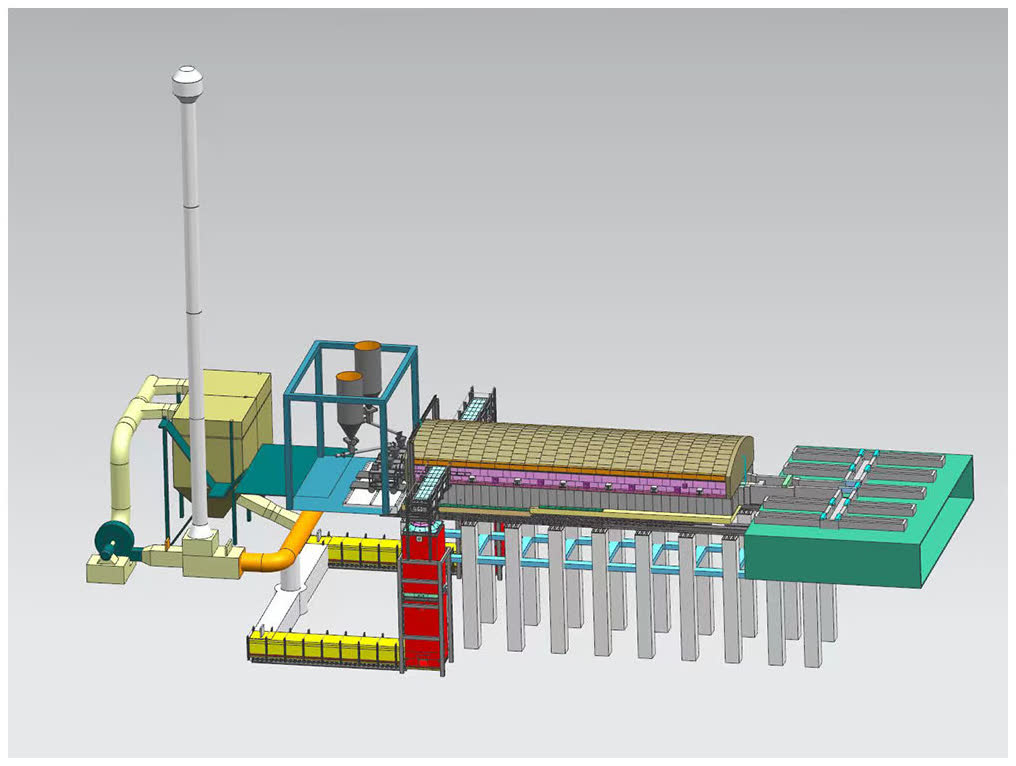
CHANGSHU, JIANGSU, CHINA, October 29, 2026 /EINPresswire.com/ — Developing a commercial-scale Glass Fiber Production Line requires bridging high-temperature refractory glass melting with micro-scale platinum bushing filament attenuation, chemical sizing, and high-speed traversing winding. Engineering teams evaluate silica, kaolin clay, limestone, and colemanite raw material chemistries to design boron-free E-glass formulations yielding tens of thousands of tons per year. Engaging a single-point turnkey contractor eliminates battery-limit interface errors and accelerates operational startup.
Continuous filament glass fiber provides high tensile strength, electrical insulation, and corrosion resistance for composite wind turbine blades, automotive light-weighting panels, aerospace structures, and electronic printed circuit boards. Manufacturing filaments with uniform diameters between nine and twenty-four micrometers requires precise thermal stability and high-purity glass homogenization.
Oxy-Fuel Unit Melter Furnace Dynamics and Glass Batch Conditioning
Melting and conditioning silica-based glass batches requires extreme thermal uniformity and bubble-free melt refinement. Selecting advanced oxy-fuel combustion cuts energy consumption and dramatically reduces nitrogen oxide emissions compared to conventional air-fired recuperative furnaces.
Oxy-Fuel Combustion Furnace Core: Unit melter tanks burning natural gas with ninety-five percent pure oxygen achieve flame temperatures exceeding 1,600°C, accelerating mineral batch dissolution while eliminating thermal NOx formation.
Fused-Cast Refractory Tank Linings: Dense fused-cast zirconia-alumina-silica and chrome-alumina refractory blocks resist aggressive glass melt erosion, ensuring furnace campaign lives exceeding eight to ten years.
Multi-Zone Forehearth Conditioning Channels: Precision forehearth distribution channels utilize electric heating electrodes and molybdenum booster rods to condition glass melt temperatures within plus or minus 0.5°C before bushing entry.
Uniform viscosity profiles in the forehearth are critical because a temperature shift of just two degrees Celsius alters glass viscosity sufficiently to destabilize filament drawing. Automated molybdenum stirrers homogenize the melt, preventing chemical striations and eliminating seed bubbles before the glass flows onto bushing plates. Individual forehearth zone burner manifolds utilize digital mass flow controllers that meter pre-mixed oxygen and natural gas ratios with high precision. Advanced optical pyrometers continuously sight onto molten glass surface channels, feeding real-time temperature feedback into local cascade control loops.
Continuous gravimetric batch charging systems feed homogeneous raw material mixtures into the furnace doghouse under sealed nitrogen hoods. Baghouse filtration systems recover flue gas particulates, recycling captured batch dust directly into upstream batch mixing bins.
Platinum-Rhodium Bushing Design and High-Speed Precision Filament Winding
Attenuating molten glass streams into thousands of microscopic filaments requires specialized precious metal bushing plates and synchronized high-speed mechanical winders. Maintaining stable fiber attenuation cones prevents costly filament breakage.
Platinum-Rhodium Bushing Plates: Precision-machined alloy plates featuring two thousand to four thousand micro-nozzles operate under continuous electric direct-resistance heating, maintaining uniform orifice temperatures around 1,250°C.
High-Pressure Water Mist Quenching: Specialized cooling fins and fin-cooler water tubes positioned beneath the bushing plate rapidly chill nascent glass cones, locking in filament circularity.
High-Speed Collet Winders: Precision traversing winders draw attenuated filaments at linear surface speeds exceeding two thousand to three thousand meters per minute, winding continuous glass cakes onto expanding collets.
Precision digital transformer controls regulate electric heating currents supplied to individual bushing plates with sub-milliamp accuracy. Rapid water quenching prevents filament crystallization, preserving amorphous structural ductility during high-speed drawing. Dynamic traverse wire guides distribute filament bundles across rotating cardboard tubes, forming cross-wound bobbins with stable package geometries. Automated collet changers switch winding spindles within seconds, ensuring continuous, uninterrupted drawing operations.
Chemical Sizing Chemistry, Traversing Creels, and Roving Packaging Trains
Bare glass filaments are extremely fragile and subject to self-abrasion and mechanical breakage during winding. Applying chemical sizing coatings provides essential lubrication, filament integrity, and organo-chemical compatibility with downstream composite resins.
Kiss-Roll Chemical Sizing Applicators: Rotating graphite or chrome applicator rolls coat running filament strands with multi-component aqueous emulsions containing silane coupling agents, film-forming polymers, and lubricants.
High-Capacity Bobbin Drying Ovens: Multi-stage radio-frequency dielectric or circulating hot-air drying ovens evaporate moisture from wound bobbins, curing sizing polymers without scorching delicate fibers.
Creel Pultrusion and Direct Roving Assembly: Automated roving winders combine multiple bobbin strands into direct-draw or assembled rovings, maintaining balanced strand tension for structural pultrusion and weaving.
Organofunctional silane molecules within the sizing formula establish strong covalent chemical bridges between inorganic glass surfaces and organic polyester, vinyl ester, or epoxy matrix resins. This molecular bonding delivers composite products with exceptional interlaminar shear strength and long-term water resistance. Automated optical inspection sensors detect broken filament fuzz on running rovings, automatically flagging sub-standard packages. Automated robotic palletizers carton and shrink-wrap verified roving packages for global containerized freight.
Turnkey EPC Engineering Governance and Specialized Equipment Supply
Constructing an international continuous glass fiber production plant demands unified project governance across furnace masonry, high-purity oxygen utilities, and precision high-speed textile machinery. Partnering with a proven industrial contractor such as Suzhou CMT provides comprehensive single-source EPC execution compliant with international ASME pressure vessel, CE machinery, and ISO 9001 standards. Coordinated multi-base manufacturing centers fabricate batch weighing towers, forehearth channels, high-speed winders, and sizing preparation kitchens under strict quality management regimes. Comprehensive factory acceptance testing confirms electrical transformer stability, collet dynamic balance, and automation programming before dispatch.
Specialized field engineering crews oversee furnace refractory block dry masonry assembly, optical laser busbar alignment, and clean utility piping installation. Standardized quality hold points guarantee that all refractory expansion joints and electrode cooling jackets pass non-destructive examinations prior to furnace heat-up.
Systematic Furnace Commissioning, Thermal Heat-Up, and Bushing Calibration
A rigorous commissioning protocol prevents catastrophic refractory thermal spalling and ensures safe glass melting during initial startup. Phased execution transitions the plant safely from cold dry testing to continuous commercial drawing.
Refractory Thermal Heat-Up Campaign: Temporary high-velocity gas burners heat the furnace tank from ambient to 1,200°C along strict three-week expansion curves, tightening crown tie-rods as silica bricks expand.
Glass Cullet Melting and Drain Flushing: Virgin cullet charges dissolve and flush refractory debris through bottom drain orifices, establishing pristine optical purity in forehearth channels.
Performance Guarantee Testing: Continuous seventy-two-hour commercial production runs verify daily drawn tonnage, specific energy consumption per ton of glass, filament diameter distributions, and package roving yield.
Structured classroom instruction and hands-on control console training prepare local operators for glass pull adjustments, bushing nozzle clearing, and emergency glass drain procedures. Detailed operating manuals outline preventative maintenance schedules and platinum recycling protocols for all precious metal assets.
Composite engineering directors and industrial plant sponsors can evaluate turnkey glass fiber equipment specifications directly at https://www.cmtproject.com/ to review plant capabilities.
Suzhou CMT Engineering Co., Ltd.
Suzhou CMT Engineering Co., Ltd.
Legal Disclaimer:
EIN Presswire provides this news content “as is” without warranty of any kind. We do not accept any responsibility or liability
for the accuracy, content, images, videos, licenses, completeness, legality, or reliability of the information contained in this
article. If you have any complaints or copyright issues related to this article, kindly contact the author above.

Media gallery