New intellectual property milestones strengthen HeartLung’s leadership in AI–enabled preventive CT imaging and coronary inflammation assessment
HOUSTON, TX, UNITED STATES, May 3, 2026 /EINPresswire.com/ — HeartLung Corporation, a medical technology company advancing AI–enabled, CT–based opportunistic screening and early disease detection, today announced that the United States Patent and Trademark Office has issued U.S. Patent No. 12,620,494, titled “Predicting adverse health risk based on CT scan images and AI–enabled cardiovascular structure volumetry.” The newly issued patent arises from U.S. Application No. 18/167,691 and protects HeartLung’s pioneering approach to automated volumetric analysis of cardiovascular structures using CT scans, including non–contrast cardiac CT, non–gated chest CT, low–dose lung cancer screening CT, and contrast–enhanced CT scans.
The patent represents a major intellectual property milestone for AutoChamber™, HeartLung’s FDA Breakthrough Device–designated and FDA–cleared AI technology for automated cardiac chamber volumetry. AutoChamber™ enables clinicians to measure cardiac volume, individual cardiac chamber volumes, and left ventricular wall mass from non–contrast and contrast–enhanced chest CT scans, helping identify enlarged cardiac chambers and left ventricular hypertrophy that may otherwise be missed on routine interpretation.
AutoChamber™ has also achieved a major reimbursement milestone. CMS approved HCPCS code G0183 for AutoChamber™ AI reporting of cardiac chamber volume and left ventricular mass from existing CT scans, with the code effective April 1, 2025.
“AutoChamber validates a vision we have pursued for years: CT scans should not be used only to look for one disease at a time,” said Morteza Naghavi, MD, Founder and President of HeartLung Corporation. “Every cardiac CT scan contains far more information than is typically reported. We look forward to seeing automated cardiac chamber volumetry, along with other components of AI–CVD®, incorporated into all cardiac CT scans, including the millions of CCTA scans performed in the United States and worldwide every year. This patent strengthens our ability to bring that vision into routine clinical care.”
HeartLung also announced that the USPTO has issued a Notice of Allowance for U.S. Application No. 18/469,384, titled “Computed tomography based imaging of vasa vasorum density for detection and monitoring of inflammation and angiogenesis in vascular wall.” The allowed application protects HeartLung’s CT–based approach to measuring vasa vasorum density in and around coronary arteries, including AI–enabled analysis of contrast–enhanced coronary CT angiography data to support evaluation of vascular wall inflammation and angiogenesis.
The vasa vasorum are microscopic blood vessels that supply the arterial wall. In atherosclerosis, expansion and proliferation of the vasa vasorum are closely linked to plaque inflammation, angiogenesis, necrotic core formation, intraplaque hemorrhage, and plaque progression. HeartLung believes that direct CT–based assessment of vasa vasorum density and perfusion may provide a more biologically grounded marker of coronary inflammation than approaches that rely solely on indirect changes in perivascular fat attenuation.
“Vasa vasorum imaging is an important next frontier in coronary CT,” said Dr. Naghavi. “We believe measuring vasa vasorum density and perfusion is more directly connected to the histopathology of vascular inflammation than indirect perivascular fat attenuation methods. This allowed patent application gives HeartLung a strong foundation to advance a differentiated coronary inflammation imaging platform toward commercialization.”
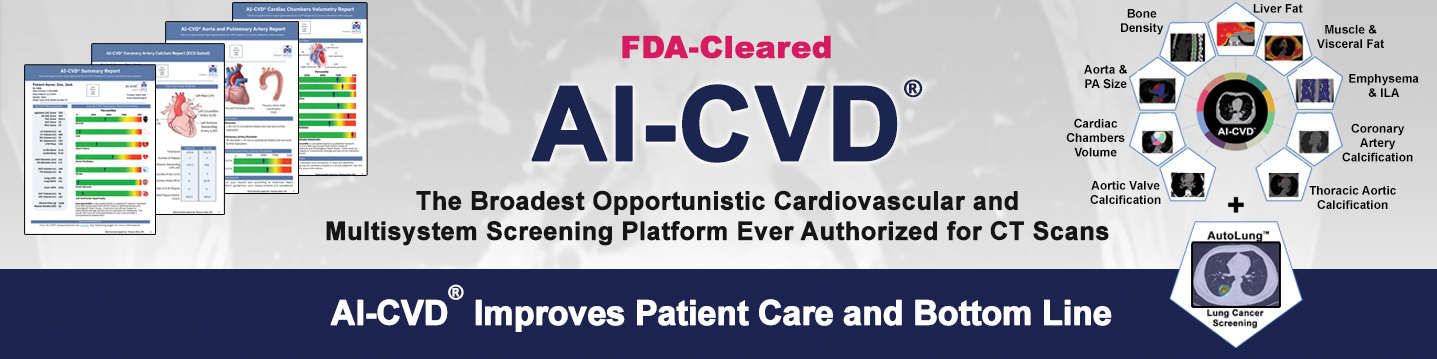
Together, the issued AutoChamber patent and the allowed vasa vasorum inflammation imaging application expand HeartLung’s intellectual property portfolio across two major areas of preventive cardiovascular imaging: structural heart risk, including chamber enlargement and left ventricular hypertrophy, and coronary vascular wall inflammation. These technologies complement AI–CVD®, HeartLung’s FDA–cleared opportunistic cardiovascular and multisystem CT screening platform, which includes automated measurement domains for coronary calcium, cardiac chamber volumetry, aortic and pulmonary artery sizing, epicardial fat, liver attenuation, lung attenuation, bone mineral density, and muscle–fat composition.
HeartLung’s scientific publications have shown that AI–enabled cardiac chamber volumetry from non–contrast CT can predict atrial fibrillation, stroke, and heart failure, and can add clinically meaningful information beyond traditional coronary calcium scoring and blood biomarkers. In MESA, AI–enabled left atrial volumetry predicted incident atrial fibrillation and stroke comparably to cardiac MRI over 15 years, while AI–enabled chamber volumetry significantly outperformed NT–proBNP and Agatston CAC score for incident heart failure prediction.
“These patents are not just legal milestones, they are clinical milestones,” said Dr. Naghavi. “They p
rotect the core innovations behind a new era of preventive imaging, where routine CT scans can uncover hidden heart disease, vascular inflammation, osteoporosis, fatty liver disease, emphysema, and other silent conditions before patients suffer irreversible events.”
Marlon Montes
HeartLung Technologies
6504488089 ext.
contact@heartlung.ai
HeartLung AI scan
Legal Disclaimer:
EIN Presswire provides this news content “as is” without warranty of any kind. We do not accept any responsibility or liability
for the accuracy, content, images, videos, licenses, completeness, legality, or reliability of the information contained in this
article. If you have any complaints or copyright issues related to this article, kindly contact the author above.

Media gallery