
EUSTIS, FL – October 07, 2026 – PRESSADVANTAGE –
All County Collision has published consumer guidance explaining why an initial collision repair estimate may need to be reviewed after technicians gain more information about a damaged vehicle. The October publication focuses on the difference between an initial assessment and the detailed repair plan that can develop as damaged components are removed and previously inaccessible areas become available for inspection.
The guidance expands on All County Collision’s collision repair process by organizing the issue around three stages: the initial visible assessment, damage discovery during disassembly, and documentation of changes to the repair plan.
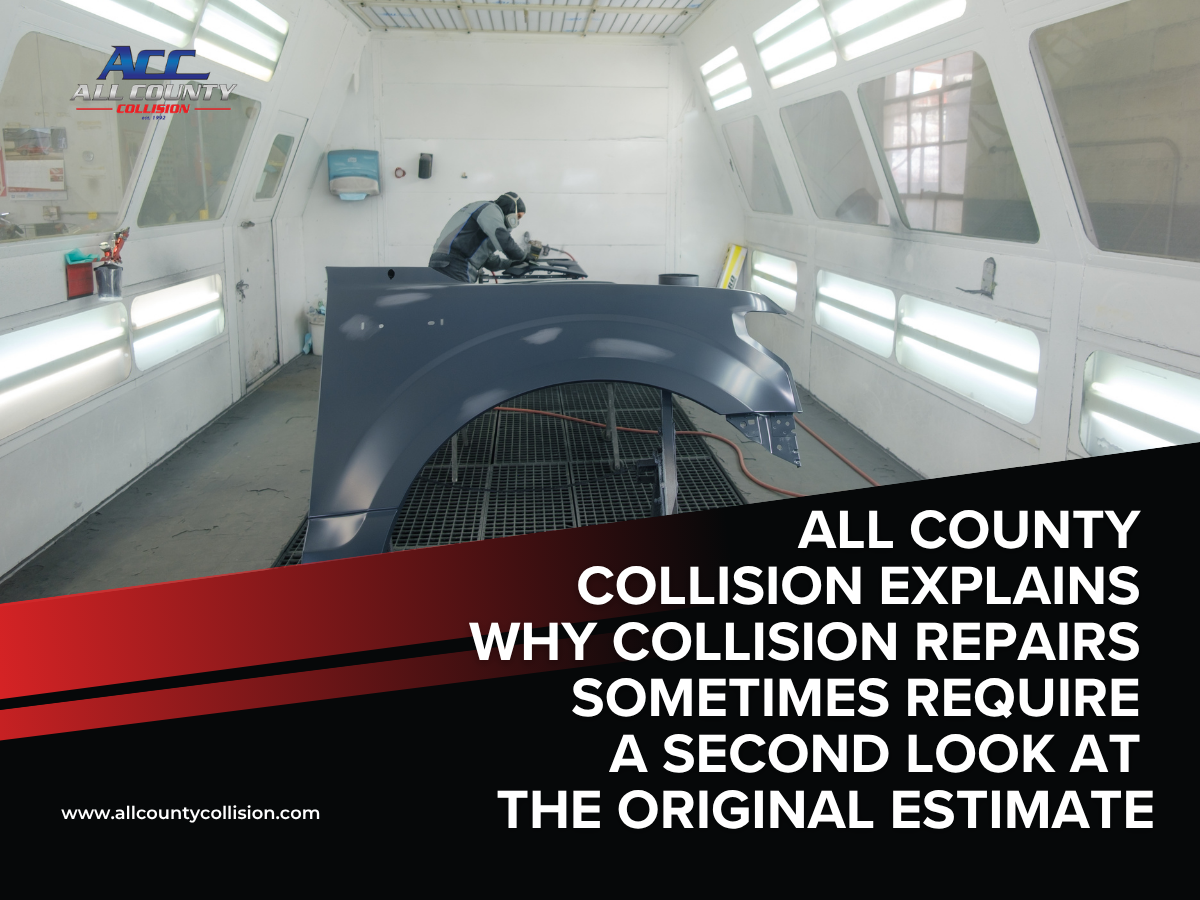
An initial estimate is generally based on the conditions that can be identified at the time the vehicle is first evaluated. Visible dents, cracked components, damaged paint, displaced panels, and other accessible conditions can be documented, but some areas may remain covered by bumpers, trim, interior components, or adjoining body panels.
This means the first estimate can serve as a starting point rather than a complete prediction of every operation that will ultimately be required. The amount of information available can change as technicians progress through the repair-planning process.
Disassembly provides the second stage addressed in the October guidance. Removing collision-damaged components can expose brackets, reinforcement areas, attachment points, wiring, adjacent panels, and other parts that could not be fully inspected from the exterior.
A damaged bumper provides a practical example. The visible bumper cover may show cracking, scraping, or deformation, while components positioned behind it remain concealed during the initial assessment. Once access is available, technicians can document the condition of mounting areas and other affected parts of the assembly.
Door, fender, and quarter-panel damage can create similar situations. An exterior dent may be readily visible, while the condition of an adjoining edge, reinforcement, attachment area, or component behind the damaged surface becomes clearer later in the evaluation.
All County Collision’s collision repair information provides additional context for how these findings become part of a broader repair plan. When newly identified damage is related to the collision, the repair documentation can be updated to reflect the additional parts, labor, or procedures associated with the documented condition.
This type of update is commonly described within the collision repair process as a supplement. A supplement does not necessarily indicate that the original assessment was incorrect. In some cases, it reflects information that could not reasonably be confirmed until damaged components were removed or additional diagnostic information became available.
The October publication distinguishes this process from automatically adding repairs after work has begun. Changes to the repair plan are based on documented findings from the individual vehicle rather than an assumption that every collision contains additional damage.
Vehicle technology can also contribute new information during repair planning. Modern vehicles can contain electronic components, wiring, cameras, sensors, and control-related systems within or near collision-damaged areas. Depending on the vehicle and impact, diagnostic procedures or manufacturer repair information can identify operations that were not apparent from exterior damage alone.
Parts decisions can also change as the condition of a component becomes clearer. A part initially considered for repair may reveal additional deformation or damage in a location with specific repair limitations. Conversely, closer inspection may provide enough information to confirm that a component remains repairable under the applicable procedures.
Manufacturer repair information can therefore become relevant as the repair plan develops. Vehicle-specific procedures may identify requirements involving component removal, replacement, joining, measurements, diagnostics, or other operations associated with the damaged area.
The October guidance also explains why a change in the documented repair scope can affect timing. Additional parts may need to be identified or obtained, and newly documented operations can alter the sequence required to complete the repair. The specific effect depends on the individual vehicle and the findings made during repair planning.
For consumers, the key distinction is between an estimate based on currently accessible information and a repair plan informed by a more complete examination of the collision area. The two can differ without indicating that unnecessary work has been added or that additional damage must exist in every accident.
The publication gives vehicle owners a clearer way to interpret changes that occur after the initial estimate. The relevant consideration is whether additional operations correspond with documented conditions identified as technicians gain access to the damaged area and review applicable repair information.
This focus distinguishes the October guidance from broader information about hidden collision damage. Rather than concentrating primarily on where concealed damage may occur, the new publication explains how additional findings move from inspection into the documented repair plan and why the original estimate may consequently require a second review.
Information about the facility and its services is available through All County Collision’s Eustis location.
All County Collision provides collision repair and auto body repair services for vehicle owners in Eustis and surrounding Central Florida communities. The facility is located at 25 S Bay St, Eustis, FL 32726, United States.
###
For more information about All County Collision, contact the company here:
All County Collision
Ryan DeMarco
3523574599
ryan@allcountycollision.com
25 S Bay Street, Eustis, FL 32726


