
Key Takeaways
- Proper winterization protects center pivot systems from freeze damage that can cost thousands of pounds to repair, and keeps equipment ready for the next growing season
- Fall shutdown should happen alongside soybean harvest, typically September to October, before sustained freezing temperatures set in
- A frozen gearbox is one of the most expensive single failures a neglected pivot can suffer, making drainage and oil checks essential before storage
- Professional compressed-air blowouts clear water more thoroughly than most farm compressors can manage, reducing the risk of cracked pipes and fittings
- A free Center Pivot Winterization Planner from aguafox provides a monthly schedule and checklist to help plan the shutdown process
As harvest wraps up and soybean fields turn gold then bare, attention naturally shifts to next year’s planting. Before that happens, though, the pivot sitting quietly in the field needs proper care to survive the months ahead without damage.
Why Freeze Damage Threatens Your Pivot
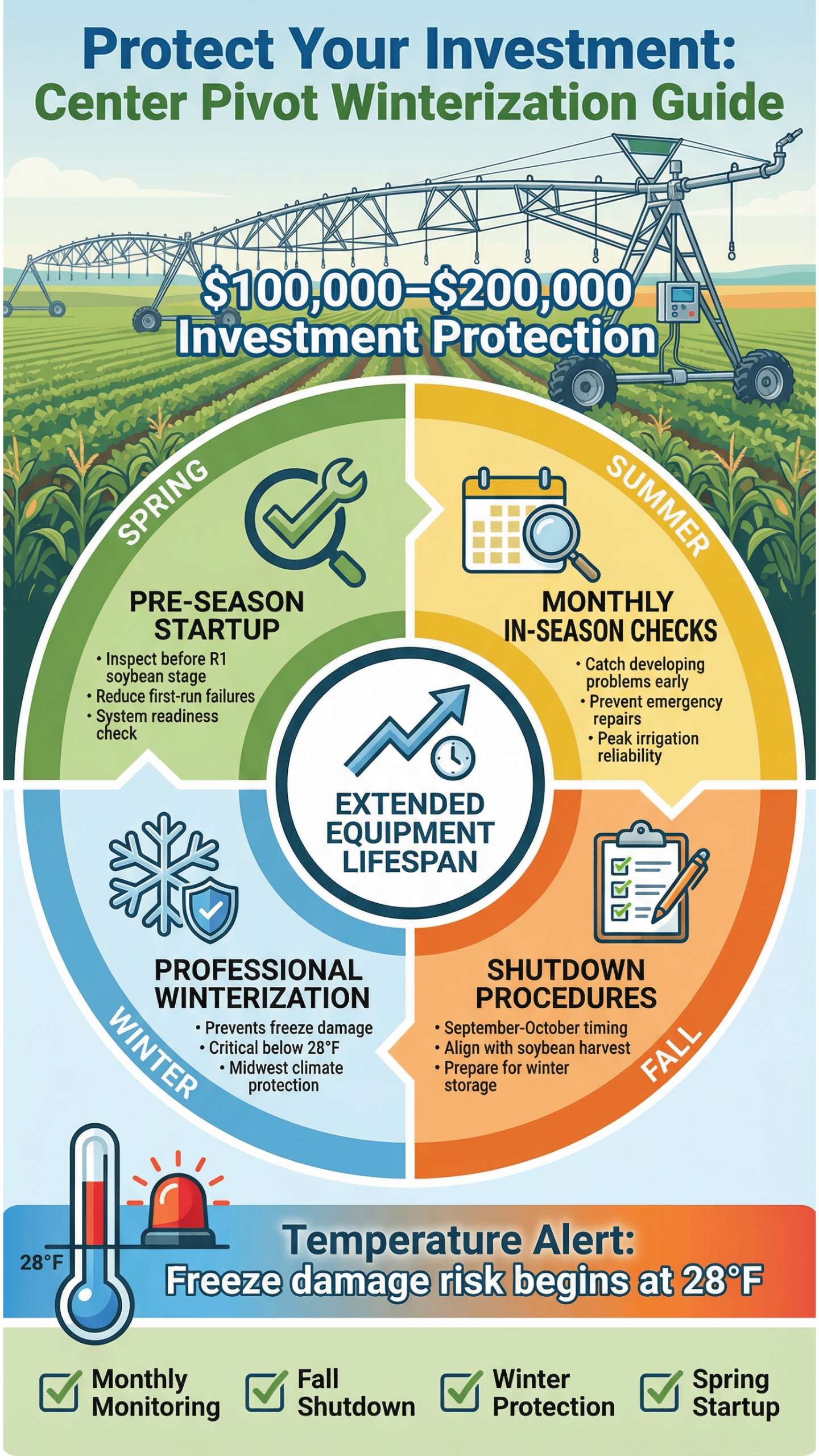
Water left sitting inside pipes, gearboxes and sprinkler bodies behaves predictably once temperatures drop below freezing: it expands, and that expansion cracks metal, splits seals and warps fittings that were never designed to hold ice. Across Midwest growing regions, temperatures regularly fall below -2°C (28°F) for extended stretches during winter, and any standing water left in the system during that period becomes a liability rather than a harmless leftover. A pivot that looks fine in October can hide a cracked gearbox casing or a split regulator that only reveals itself when the system is switched back on in spring, often at the worst possible moment.
The frustrating part is that freeze damage is almost entirely preventable. Unlike weather-related crop losses, which farmers have limited control over, equipment damage from ice is a direct result of what was or wasn’t done before the cold arrived. A pivot that’s properly drained, inspected and parked correctly has a far better chance of starting the next season without a hitch than one left exposed to whatever winter brings.
The Case for Fall Winterization
Treating winterization as an optional extra rather than a core part of the farming calendar is one of the costlier mistakes a soybean operation can make. The case for doing it properly, every autumn, without exception, rests on both financial protection and practical timing.
Protecting a £100,000-£200,000 Investment
A center pivot system represents one of the largest single purchases on a soybean farm, often falling somewhere in the £100,000-£200,000 range once the pump, well, pipeline and controls are added to the pivot machine itself. Equipment built to this standard is designed for decades of reliable service, but that lifespan depends heavily on how well it’s looked after between seasons rather than purely on the quality of the components. Seasonal maintenance, including proper winterization, is what separates a system still earning its keep after twenty years from one needing expensive premature replacement. AguaFox’s Center Pivot Winterization Planner lays out a month-by-month schedule precisely because spreading small maintenance tasks across the year protects that investment far more effectively than scrambling through a single checklist in November.
A single frozen gearbox requiring replacement is a painful but common example of what happens when winterization gets skipped. Multiply that kind of failure across several towers on a system that was never drained properly, and total repair costs climb quickly into territory that dwarfs whatever time or money would have been spent on proper shutdown procedures in the autumn.
Aligning Shutdown With Soybean Harvest
Fall shutdown procedures typically happen in September and October, which conveniently lines up with soybean harvest across most of the Midwest. This timing isn’t accidental. Once irrigation needs drop off as pods mature, the pivot becomes free for shutdown work while the weather is still mild enough to carry out inspections, drainage and repairs comfortably outdoors. Waiting until the first hard frost threatens leaves far less room to source replacement parts or book a professional service slot, since everyone else in the region tends to be scrambling for the same help at the same time.
Regional timing varies somewhat. Growers in the northern Corn Belt, such as Minnesota and North Dakota, generally need winterization wrapped up by mid-October, while those further south across Iowa, Nebraska and into Missouri and Illinois have a slightly longer window stretching into late October or early November. Matching the shutdown date to local frost patterns, rather than a fixed calendar date, keeps the whole process from becoming a last-minute rush.
Step-by-Step Winterization Checklist
A thorough winterization routine touches several distinct parts of the system, each with its own failure points if left unattended. Working through them methodically, rather than skipping around, reduces the chance of missing something important.
Flushing Pipes and Draining Standing Water
Before anything else, flush the system to clear out sediment, scale and any sand the well might have pumped through during the season. Cleaning out the sand trap at this stage prevents buildup that could clog nozzles or regulators come spring. Once flushed, every above-ground pipe needs draining completely, since any pocket of standing water left behind becomes a potential crack point once temperatures fall.
Open drain valves at each low point along the spans and allow water to run out fully rather than assuming gravity alone has done the job. Checking boots, gaskets and mid-drains for leaks at the same time catches small problems while they’re still cheap to fix.
Protecting Gearboxes and the Drivetrain
Gearboxes deserve particular attention, since accumulated water inside them is a common source of winter damage that often isn’t visible until the system fails to turn over in spring. Draining water from each gearbox and topping it off with the correct lubricant protects seals and bearings through the cold months. Checking for oil leaks around the seals at the same time flags wear before it becomes a bigger repair.
The wider drivetrain needs a once-over too:
- Inspect knuckles for wear and confirm shields are properly in place
- Check tire pressure, since underinflated tires add strain to drive motors
- Look for worn or broken sprinklers, regulators and other components that have reached their expected service life, generally somewhere between 7,000 and 10,000 operating hours
- Check span-to-span grounding connections for continuity
Securing Control Panels and Wiring
Control panels are a favourite winter hideaway for rodents, and a mouse nesting inside a warm panel box can chew through wiring that leads to expensive shorts or safety failures the following season. Checking panels for loose or damaged connections, then sealing up any openings that could let pests in, is a simple task that pays off disproportionately. Grounding connections and grounding rods deserve a look at the same time, since corrosion here can affect the whole system’s electrical safety.
Locking and securing the system afterwards does more than protect electronics from tampering. It prevents someone switching the pivot on during the off-season without realising ice has built up, which can cause serious structural damage to the whole machine.
Parking, Tracks and Site Sanitation
Where the pivot is parked for winter matters more than it might seem. Positioning the system parallel to prevailing winds reduces wind-loading stress on the structure through winter storms, and choosing a level surface rather than leaving it sitting in an old wheel track allows the machine to expand and contract naturally with freezing temperatures rather than binding against hardened ruts. Filling in wheel tracks during autumn gives them time to firm up properly before the ground freezes solid.
Cleaning up vegetation around the pivot point and well also makes the area considerably less inviting to rodents looking for winter shelter. For operations running chemigation equipment, draining and cleaning the pump and hoses prevents leftover fertiliser residue from corroding components over the following months.
Professional Blowout vs DIY Drainage
Not every winterization task needs a professional on site, but complete water removal is one area where the right equipment makes a genuine difference to the outcome.
What a Compressed-Air Blowout Involves
A professional blowout uses high-volume compressed air to force every last trace of water out of pipes, valves and sprinkler bodies, including sections that gravity drainage alone tends to miss. This matters because incomplete drainage leaves water sitting in low points and fittings exactly where it’s most likely to freeze and crack something expensive. The service typically takes a few hours to complete and should be scheduled before sustained sub-freezing temperatures arrive in the local area.
When DIY Risks Outweigh the Savings
Attempting a full blowout with a standard farm air compressor rarely delivers the air volume needed to clear a quarter-mile system properly, since most home units fall well short of the high-capacity output that professional equipment provides. The saving on a DIY attempt can look appealing upfront, but an incomplete blowout risks leaving exactly the kind of pocketed water that causes freeze cracks come midwinter. Professional service also brings the benefit of an experienced set of eyes checking the system for wear while the work is underway, catching problems a farmer walking the same spans might miss.
Basic tasks such as visual inspections and tire pressure checks remain well within reach for most farmers to handle themselves. Full system blowouts and gearbox oil changes are better left to professionals who have both the equipment and the experience to do the job thoroughly.
Checking Brand-Specific Winterizing Needs
General winterization principles apply across most center pivot brands, but manufacturer-specific quirks are worth knowing before reaching for a wrench.
Following Manufacturer Gearbox Oil Intervals
Valley recommends changing gearbox oil every three years or 3,000 operating hours, whichever comes first, and sticking to that schedule protects bearings and gears from the kind of wear that shortens component life. Reinke systems commonly use bolt-together pipe spans, which make section replacement more straightforward; however, bolt torque needs checking more frequently than on welded alternatives, since loosened fittings are easier to overlook until they become a leak.
Reviewing Control Platform Settings Before Storage
Zimmatic systems built around the FieldNET pivot control platform need their cellular subscription renewed annually to keep remote monitoring features working, a detail that’s easy to let lapse over winter when nobody is checking the app daily. Reviewing control platform settings before storage, including confirming subscription status and noting any diagnostic codes before a power cycle clears them, avoids an unpleasant surprise at spring startup when remote access suddenly isn’t working as expected.
Winterized Pivots Start Stronger Next Season
Winterization isn’t a glamorous job, and it’s easy to deprioritise against the backdrop of harvest logistics and grain marketing decisions. Treating it as a core part of the farming calendar rather than an afterthought, though, is what keeps a pivot delivering reliable water for decades rather than needing premature, expensive repairs.
A system drained properly, inspected thoroughly and parked with care through winter starts the following season with far fewer surprises. Soybeans entering vegetative growth need consistent moisture at precisely the moment farmers can least afford equipment downtime, and a well-winterized pivot is simply more likely to be ready when that moment arrives. For a full seasonal breakdown to work from, consider working through a center pivot winterization checklist before the first hard frost sets in.
aguafox
Cres Digital Ltd
86-90 Paul Street
London
England
EC2A 4NE
United Kingdom


