
Key Takeaways
- Powder-coated wheels need routine care because brake dust, road salt, and temperature swings can wear down an otherwise tough finish over time
- A pH-neutral cleaner paired with soft tools protects the coating, while acidic or alkaline formulas can etch and dull it
- The right cleaning routine includes rinsing first, washing gently, drying fast, and sealing the finish for lasting protection
- Small mistakes like using automatic car washes or spraying cold water on hot rims can quietly shorten a wheel’s finish life
Powder-coated wheels bring a tough, factory-fresh look that many car owners choose specifically because it holds up better than standard paint. That durability only lasts when the coating gets the right kind of attention. Understanding what the finish actually is, what threatens it, and how to clean it the right way makes the difference between rims that still turn heads after years of driving and ones that fade long before their time.
What Makes Powder Coating Different
Powder coating starts as a dry powder that gets applied electrostatically to the wheel’s metal surface, then cured under heat until it bonds into a hard, protective shell. That process builds a layer typically between 2 and 6 mils thick, several times heavier than the thin coat of liquid paint found on many other finishes. The thickness and the way it chemically bonds to the metal give powder coating real resistance to chipping, fading, and corrosion that traditional paint struggles to match.
That resistance also changes how brake dust and road chemicals behave on the surface, explains Matt Willer, founder of Willer Time, noting that since the coating is smooth and chemically stable, metallic dust particles and de-icing chemicals have a harder time bonding permanently compared to how they latch onto bare or painted metal. This durability has made powder coating a popular upgrade for drivers who want a finish built to survive daily commutes, seasonal weather, and years of wear without constant restoration work.
None of that toughness means the coating can be ignored. Even the hardest finish degrades faster when contaminants are allowed to sit, and a cleaning routine that uses the wrong products can undo years of protection in a single wash. Choosing safe, effective products built specifically with powder-coated finishes in mind keeps these wheels looking showroom-fresh without accidentally damaging them.
Threats To A Powder-Coated Finish
Three categories of everyday exposure cause the most trouble, and each one calls for a slightly different response.
Brake Dust And Road Grime
Brake dust is loaded with metallic particles and adhesive residue that collects on wheels every time the brakes are used. Left alone, this grime can start to etch into the coating’s surface, leaving behind dullness or faint discoloration that gets harder to remove the longer it sits. Daily drivers tend to accumulate more of this buildup simply because they log more miles, especially during stop-and-go city driving where the brakes work harder and more often.
Road Salt And Moisture
Winter driving introduces a different kind of threat. Road salt and moisture can creep into every crevice of a wheel, and if they’re not rinsed away regularly, corrosion can start to form underneath the coating where it’s hardest to spot. Rain and road spray also carry oils and tire residue that form a thin film across the wheel’s face, which is why wheels exposed to wet roads need more frequent attention than those driven in dry climates.
Temperature Shock And Harsh Chemicals
Spraying cold water onto hot wheels right after a drive can shock the coating, and that rapid temperature change is capable of causing tiny micro-cracks that weaken the protective layer over time. Harsh chemicals cause similar long-term harm, particularly cleaners built for heavy-duty degreasing rather than for the specific needs of a powder-coated surface. Letting wheels cool down before cleaning, and steering clear of aggressive formulas, protects the coating from both of these avoidable stressors.
Choosing Safe Cleaning Products
Picking the right cleaner matters just as much as the cleaning technique itself. Products designed for painted metal or heavy industrial degreasing can strip away the very protection powder coating is supposed to provide.
Why pH-Neutral Cleaners Win
Cleaners sitting outside the neutral pH range put the coating at risk in two different directions. Acidic cleaners with a pH below 5 can eat into the surface, while alkaline or caustic formulas above a pH of 9 can be just as damaging in the opposite direction. Products containing hydrofluoric acid or ammonium bifluoride deserve particular caution, since these ingredients are specifically known to degrade powder coating over time. A pH-neutral wheel cleaner sidesteps these risks while still cutting through grime effectively, which is why it’s the standard recommendation for routine maintenance on this type of finish.
Tools That Protect The Coating
The tools doing the scrubbing matter as much as what’s in the bottle. Soft-bristled brushes, microfiber cloths, and sheepskin mitts clean effectively without scratching through the coating’s surface, while stiff brushes, steel wool, or scouring pads can leave marks that expose bare metal underneath. Once that metal is exposed, corrosion has a direct path to start, which turns a minor cosmetic issue into a much bigger repair down the line. Choosing non-abrasive tools every time is a small habit that protects a much larger investment.
A Step-By-Step Cleaning Routine
A consistent routine keeps contaminants from building up to the point where they become difficult to remove. Weekly rinses handle the surface-level dust and debris, while a more detailed monthly clean addresses the brake dust and road film that a quick rinse tends to miss.
Rinse, Clean, And Dry
The cleaning process works best when it follows a clear sequence from start to finish:
- Let the wheels cool down fully before starting, and avoid cleaning in direct sunlight where products can dry too fast and leave spots.
- Rinse the wheels first with a hose to knock away loose dirt and grit, which helps prevent scratching once scrubbing begins.
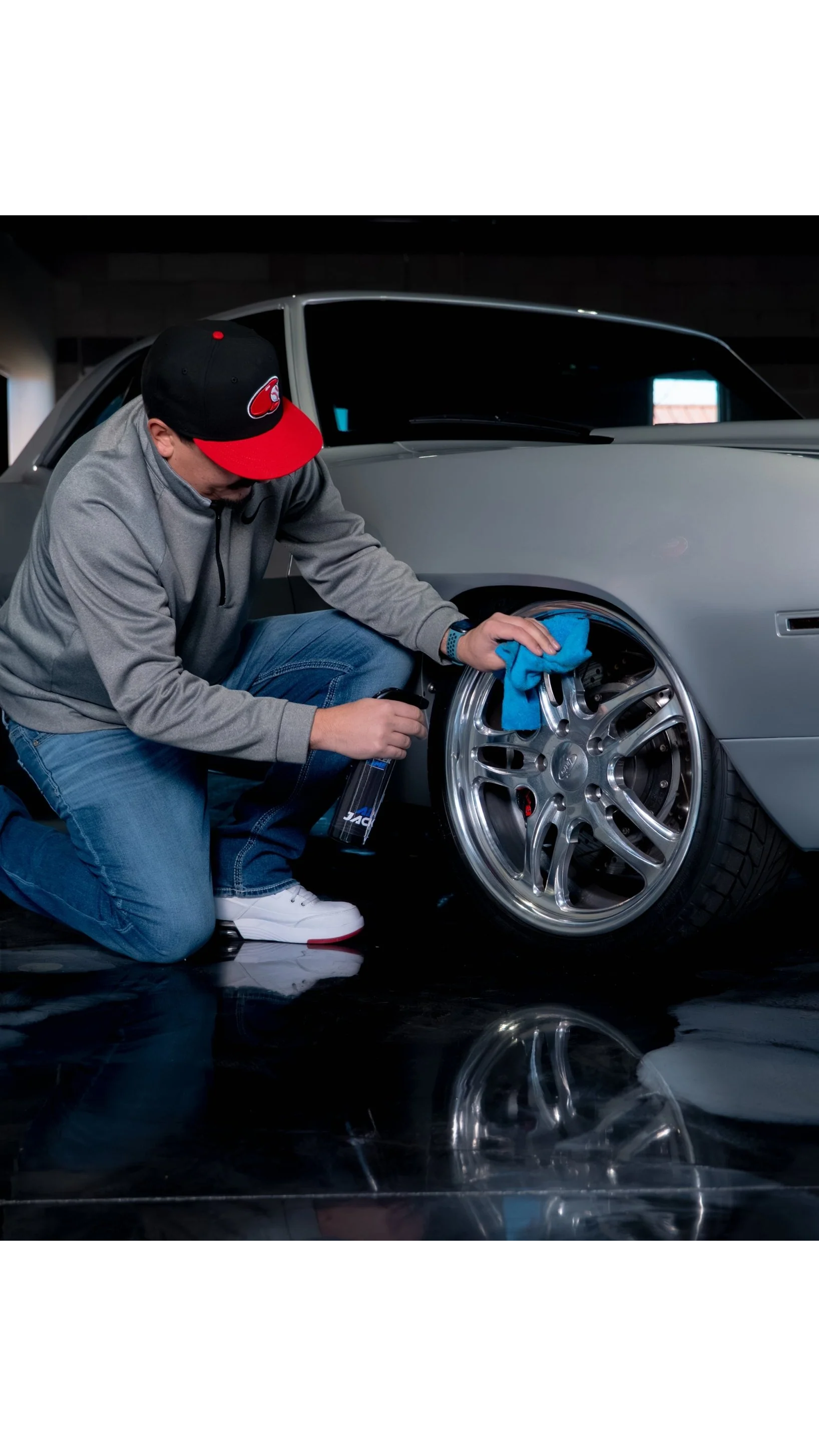
- Apply a pH-neutral cleaner and gently work it into the surface with a soft brush or microfiber cloth, paying extra attention to lug nut areas and the inner barrel.
- Rinse thoroughly to remove every trace of cleaner residue, since leftover soap can attract dirt or cause discoloration if left behind.
- Dry the wheels right away with a clean microfiber towel or compressed air to stop water spots from forming.
Common Mistakes That Cause Damage
Even careful car owners sometimes fall into habits that quietly chip away at a powder-coated finish. Recognizing these mistakes early helps avoid damage that’s much harder to reverse later.
- Running wheels through automatic car washes with aggressive rotating brushes, which can wear down the coating faster than hand washing ever would.
- Spraying cold water directly onto hot wheels right after a drive, a habit that risks the kind of temperature shock that leads to micro-cracking.
- Leaving tire dressing overspray on the wheel face, since petroleum distillates in many tire products can stain or weaken the coating if not wiped off right away.
- Using polishing or rubbing compounds on powder coat, which can dull a finish that was never meant to handle abrasive polishing.
- Letting road salt sit through the winter months instead of rinsing it off regularly, which gives corrosion more time to take hold.
Reviving A Faded Finish
A powder-coated finish that’s lost some of its shine can often be saved. The right approach depends on how far the damage has progressed.
Minor dullness usually responds well to a gentle polish or wax made specifically for powder-coated metal, which can restore the original sheen while adding a layer of UV protection against future fading. This kind of light restoration works best as a proactive step, applied every few months rather than waiting until the finish looks visibly tired.
Significant fading, visible corrosion, or peeling sections on the other hand call for professional sandblasting and a full recoat, since surface-level polishing cannot repair damage that has already reached the metal underneath. Spotting the difference early between dullness that polish can fix and damage that needs a professional’s attention keeps small problems from turning into expensive ones.
Consistent Care Keeps Wheels Showroom-Ready
Powder-coated wheels reward the car owners who treat maintenance as a routine rather than an occasional chore. Rinsing away brake dust and road salt on a regular schedule, sticking to pH-neutral cleaners and soft tools, and sealing the finish after every deep clean all work together to keep the coating doing its job for years instead of months.
None of these habits require much time once they become routine, and the payoff shows up every time the wheels catch the light looking just as sharp as the day they were installed. For drivers ready to build that habit into their regular car care, starting with a wheel cleaner spray built for powder-coated finishes makes it simple to clean, protect, and maintain that shine in a single step.
Willer Time
support@willertime.com
1(800) 555-1234
2020 N Academy Blvd Ste 261
#4504
Colorado Springs
CO
80909
United States


